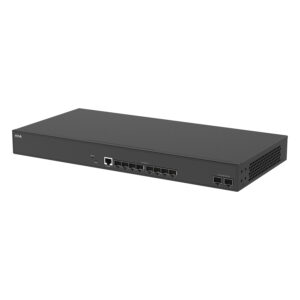


Fiber optic technology offers a high-performance solution for data transmission, making it an essential part of modern network infrastructure. By using fiber aggregation switches, you can connect multiple devices across extended distances with minimal signal loss. These switches allow for the use of fiber midspans to link different parts of a network efficiently, providing a scalable and future ready foundation. Expanding your network is simple just add more fiber connections or integrate additional network switches as your system grows. Unlike traditional copper cabling, fiber optic cables transmit data as pulses of light through strands of glass or plastic. This method offers several significant advantages, including extremely high data transfer speeds, greater bandwidth capacity, and immunity to electromagnetic interference. As a result, fiber optics are ideal for environments where reliable, high-speed communication is critical, such as data centers, surveillance systems, and enterprise networks. There are two primary types of fiber optic cables: single mode and multimode. Single mode fiber features a smaller core and allows light to travel in a single, direct path. This design makes it well suited for long-distance transmission and high-bandwidth applications, such as backbone networks and telecommunications. Multimode fiber, on the other hand, has a larger core that enables multiple light paths to travel simultaneously. This makes it more suitable for shorter distances and lower bandwidth requirements, often used in local area networks and within buildings. Whether you are building a new network or upgrading an existing one, fiber optic solutions offer the speed, reliability, and scalability needed to meet the demands of modern communication and security systems.

Fiber Optic