

A Power over Ethernet (PoE) network switch is a fundamental element in any modern security and surveillance system. It plays a critical role in ensuring that both data and power are delivered efficiently to connected devices such as network cameras, access points, and intercom systems, all through a single Ethernet cable. When selecting a PoE switch, there are three essential factors to keep in mind. First, you need to determine whether the switch is compatible with your existing network infrastructure. Second, it must be capable of supplying sufficient power to all connected devices based on their individual requirements. Finally, the switch should offer the right combination of features and functionality to support your current and future needs, whether that includes network management capabilities, port density, or redundancy options. The original PoE standard, formally introduced in 2003, marked a significant shift in how devices are powered and connected. This standard enables both power and data to be transmitted over a single Ethernet cable, simplifying installation and reducing overall infrastructure costs. Under this specification, a maximum of 15.4 watts of power is delivered from the switch or injector, with up to 12.95 watts guaranteed to reach the powered device. This level of power is well-suited for a range of low to moderately powered devices, including IP telephones, basic security cameras, and wireless access points. Choosing the right PoE switch based on the power standard and your system’s demands can greatly enhance the efficiency, scalability, and reliability of your surveillance or communication network.


Ethernet PoE
Showing the single result
-
Ethernet PoE, Ethernet PoE+, Network Switches
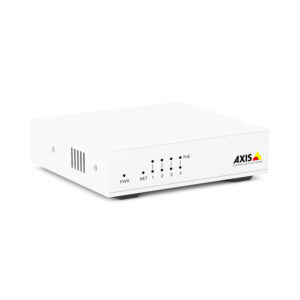
AXIS D8004 Unmanaged PoE+ Switch
The AXIS D8004 is a compact, unmanaged PoE+ switch designed to deliver reliable network connectivity and power for small surveillance or IoT setups. With four 10/100 Mbps ports supporting IEEE 802.3af/at PoE+, it provides a total power budget of 60 watts, making it suitable for powering multiple network devices such as cameras, access points, or other PoE-enabled equipment. Housed in a durable, palm-sized metal casing, this switch is built for both portability and long-lasting use in various indoor environments. Its plug-and-play design allows for easy installation without the need for complex configuration, enabling quick deployment and reducing setup time. The AXIS D8004 also meets Level VI energy efficiency standards, ensuring optimized power consumption and a reduced environmental footprint ideal for users prioritizing sustainability alongside performance.
SKU: 7331021072565